


Two Countries, One Vision
From fraternity houses in the American Midwest to villages in rural India, Breakthrough is experimenting with novel approaches to reducing violence against women and girls.
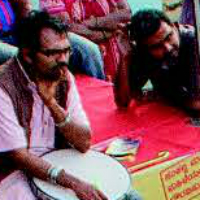
From fraternity houses in the American Midwest to villages in rural India, Breakthrough is experimenting with novel approaches to reducing violence against women and girls.

A network sponsored by the Aspen Institute is enabling corporate social intrapreneurs to become less lonely—and more effective.

For more and more social change efforts, the key to success lies in clearly defining the desired results for beneficiaries.
Iterative design methods are essential to development work—even (or especially) in regions marked by war and violence.

Through an online crowdsourcing platform, one foundation is reaching new types of partners who offer new types of solutions.
Solving the problem of rural distribution in the developing world starts with following the time-honored model of local traders.

Corporations that suffer from reputational threats often form unlikely alliances with social activist groups.

Contrary to conventional economic wisdom, relying solely on carbon taxes will not create an optimal transition to clean energy.
In working with stigmatized groups, an organization must manage the risk that it may experience stigma as well.

We should care about who is able to control and distribute data, but information is more than just a commodity.